Grandma Never Left
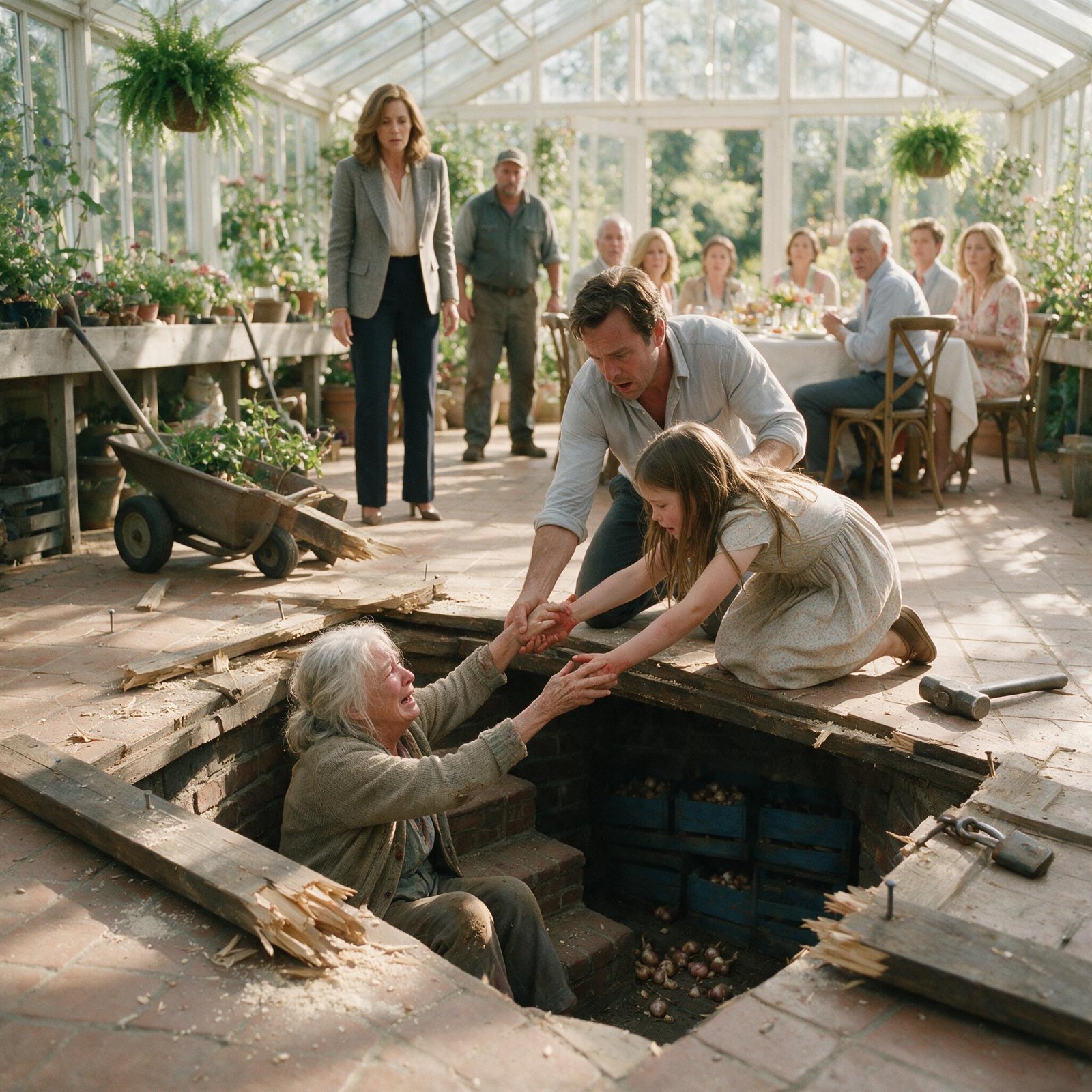
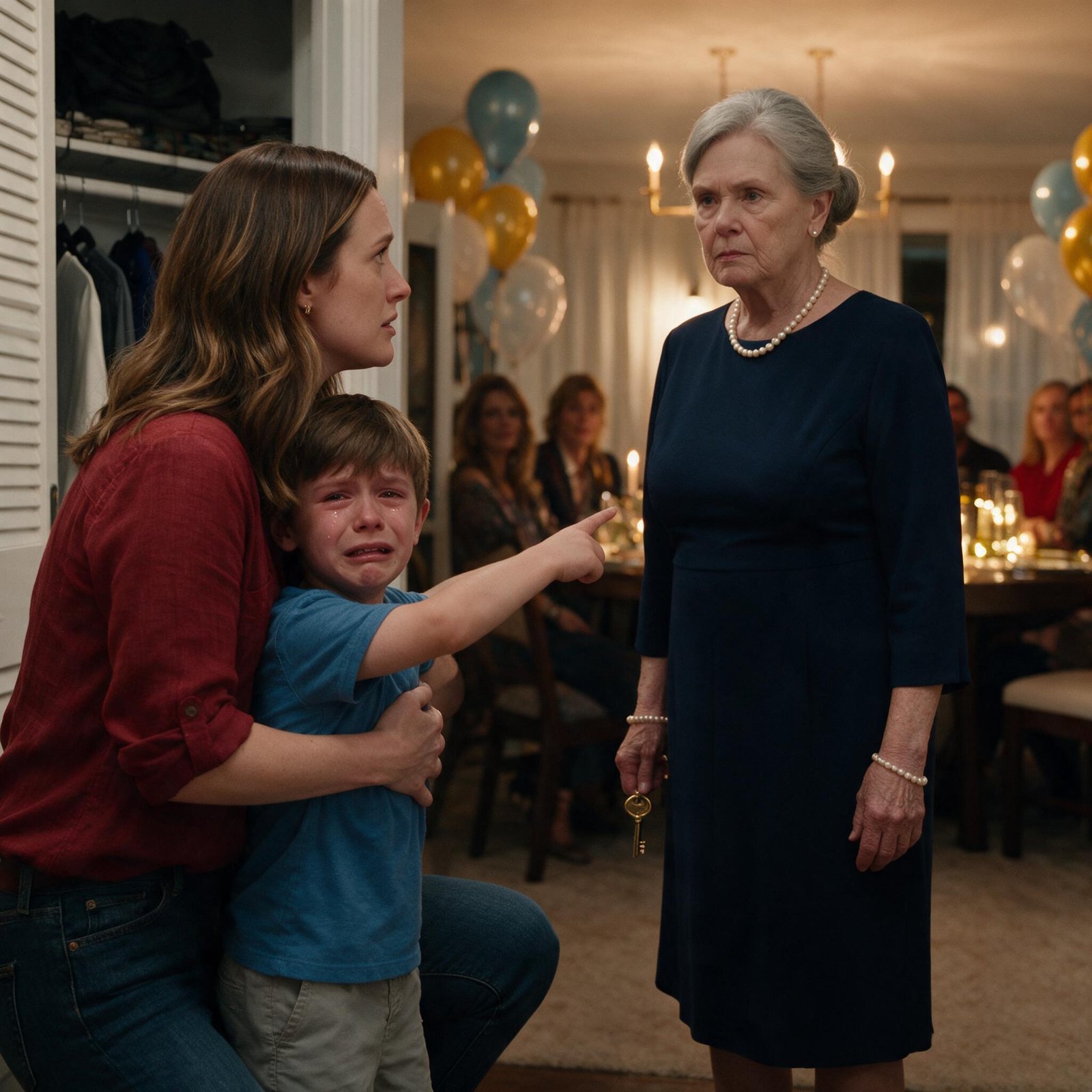
Mark kept one hand around his mother's forearm and looked over his shoulder at Diane.
Evelyn's fear explained Diane's order to keep the hatch closed.
“Keep her away from us.”
Gabriel Rosa, the estate gardener, placed himself between Diane and the opening.
Diane lifted her chin as though Rosa had misunderstood.
“Rosa, move.”
“No, Ms. Calder.”
Mark turned back before anger stole another second.
The steps were steep, Evelyn trembled, and nails protruded from the broken boards.
Mark asked Lily to hold Evelyn's hand while he and Rosa supported her weight.
Rosa secured the hatch fully open, knelt at the opposite corner, and reached down.
The two men guided Evelyn up one step at a time without pulling her arms.
Lily moved backward as Evelyn climbed, never releasing her hand.
Mark lowered Evelyn onto a folded tablecloth on the conservatory floor.
A relative called emergency services while two others moved the broken boards aside.
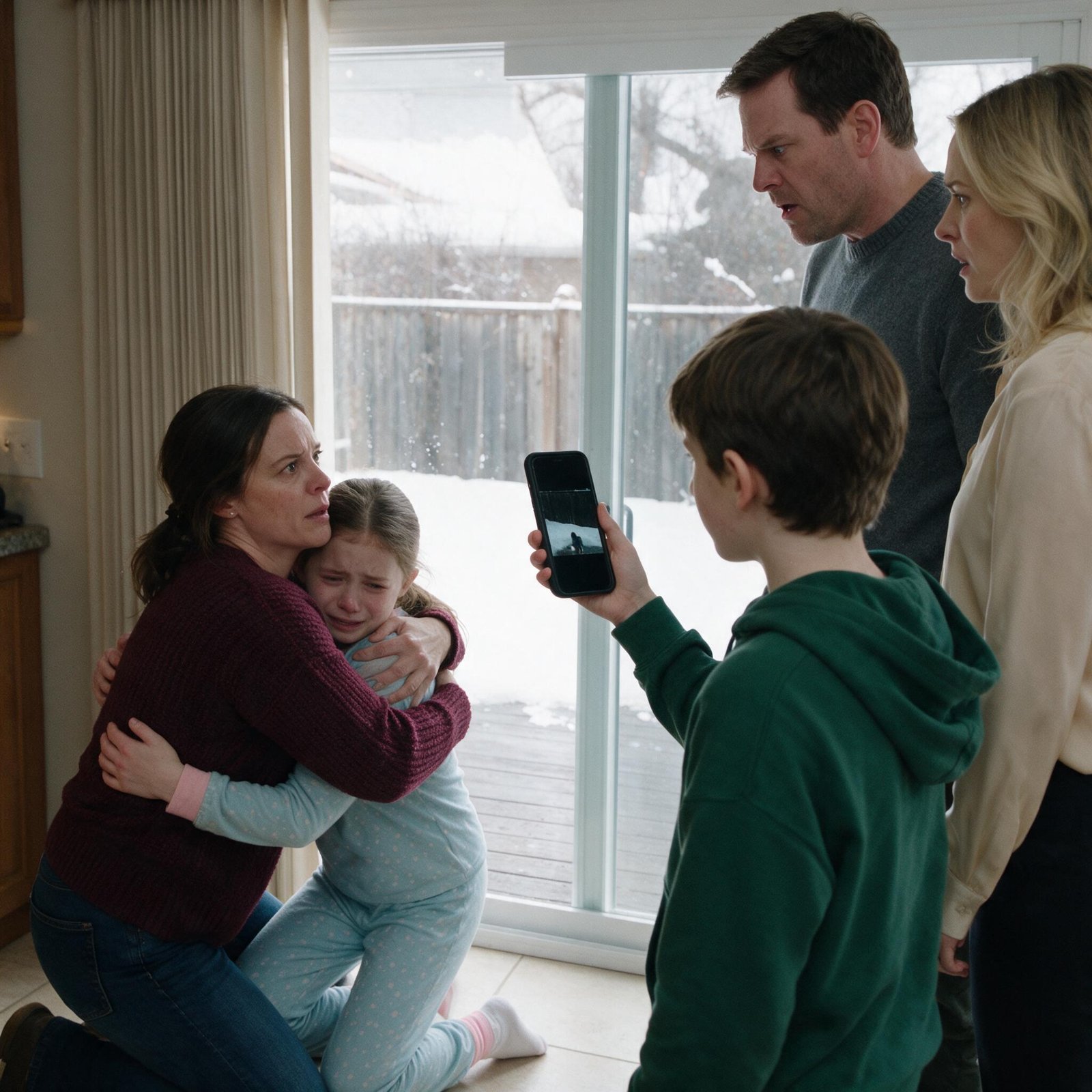
Watching Lily beside Evelyn, Mark remembered holding his daughter back.
He had called it protection after choosing Diane's certainty over Lily's fear.
“Lily, I should have listened before I held you.”
Lily looked at him without answering, then returned both hands to her grandmother's.
Mark accepted the silence because an apology did not purchase immediate forgiveness.
Evelyn's pulse fluttered, but she remained alert and clear.
She had entered thirty-four minutes earlier after Diane asked her to inspect bulb crates before brunch.
At the bottom, Evelyn heard the hatch drop, metal scrape, and hammer blows drive wood above her.
She had never agreed to a private care residence, packed for it, or left the conservatory that morning.
Diane's announcement at the table had not been a misunderstanding about plans.
It was a lie told while Evelyn sat four feet below her family.
Mark looked toward the broken barrier with a sick clarity he wished had arrived sooner.
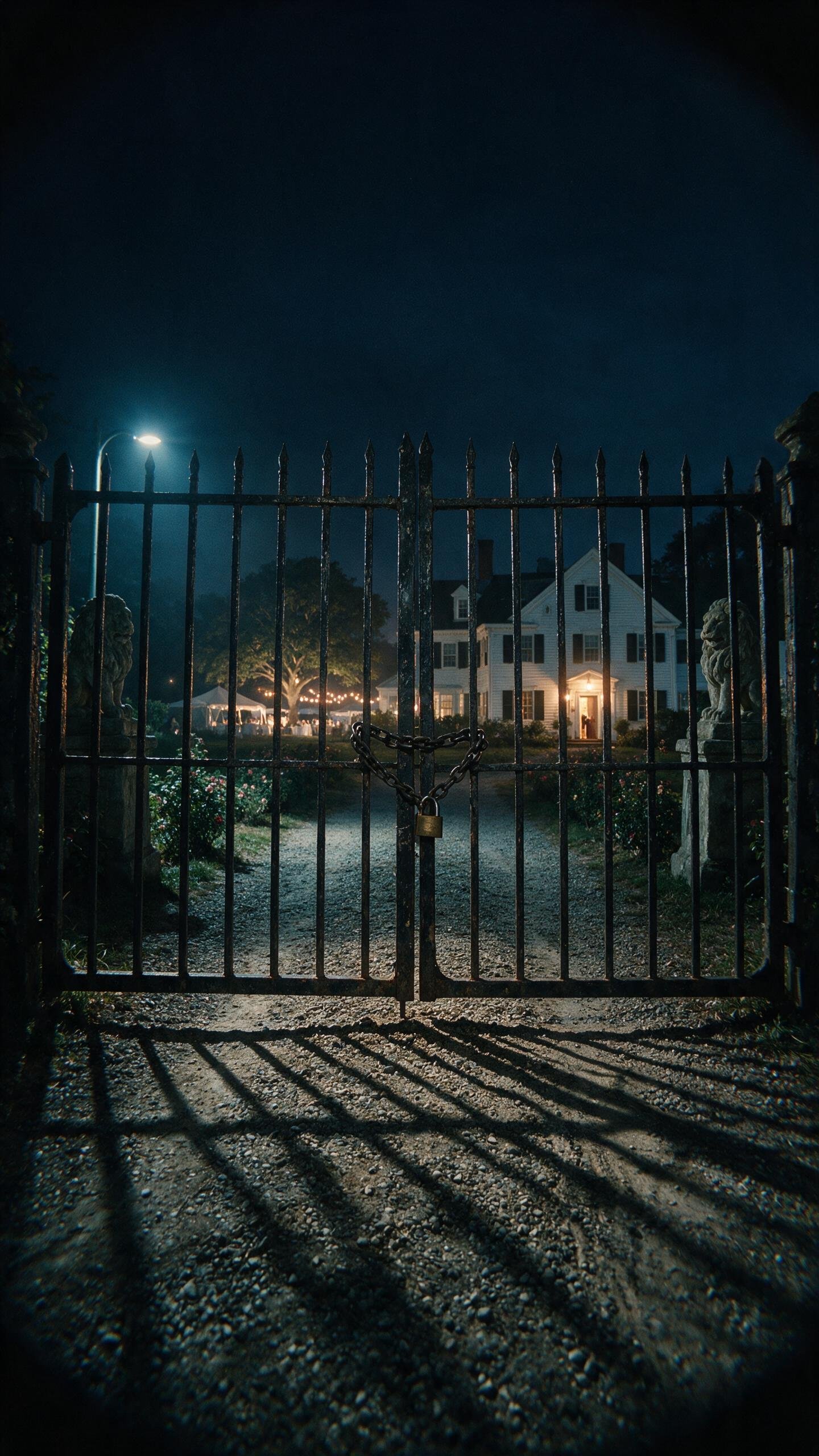
The padlock was brown with age, but the nail heads holding both cross-bars were bright, and fresh pale splinters clung around the holes.
Nothing suggested a prepared chamber or a place intended to hold her for days.
An ordinary hazard repair had become an opportunistic prison.
“Why did she send you down there?”
Evelyn tried to sit higher, and her eyes moved past Mark toward the open hatch.
“The blue crates.”
Mark followed her gaze into the shallow cellar.
Most boxes lined the rear wall, but one blue crate stood near the lowest step on the loading path.
Several bulbs lay spilled beside the lowest step, and one had split against the second.
Its interior was not clean and pale like the bulbs Mark remembered planting with Evelyn.
A soft brown lesion had eaten into one side, and a fine white web clung between two folded layers.
Rosa saw it at the same moment and stopped reaching toward the mess.
“Mrs. Calder ordered every crate left untouched this morning, and I refused Diane twice—before the care-residence lie and after it,” Rosa said.
He warned everyone to leave the bulbs untouched until they understood the damage.
It was caution, not a conclusion, and Mark refused to make one bulb an answer.
Diane took a step toward the gardening area.
Rosa shifted with her and closed the route without raising his hands.
“Those are my mother's things,” Mark said.
“They're estate stock, and they need to be moved outside before someone gets sick.”
Diane spoke smoothly, but watched the blue crate rather than Evelyn.
Evelyn tightened her grip around Lily's fingers.
“Don't let Diane move the blue crates.”
Mark asked why, but a tremor passed through Evelyn's shoulders and he stopped pressing her.
Her explanation could wait until she was warm, checked, and safe from Diane.
He left two relatives with Evelyn and Lily, then blocked the cellar and gardening exit with Rosa.
For years Mark had treated Diane's decisive voice as proof that she knew what should happen next.
That voice had tried to remove Lily, keep the hatch closed, and move the objects Evelyn named.
The family had gathered to discuss the estate sale Evelyn had chosen for herself, but the scene did not point Mark toward money.
It pointed toward a blue crate pulled onto a loading path, a damaged bulb no one had yet identified, and fresh nails driven above an old lock during a thirty-four-minute lie.
If the cellar itself was what Diane feared, why was she more afraid of the blue crates being seen—or of where Evelyn meant to take them?